
The area around your loved one’s tracheostomy looks red, feels warm, or smells unusual.
Daily site care prevents infections and keeps the stoma healthy. This guide covers cleaning protocols, dressing changes, infection recognition, and maintenance so you prevent complications and catch problems early.
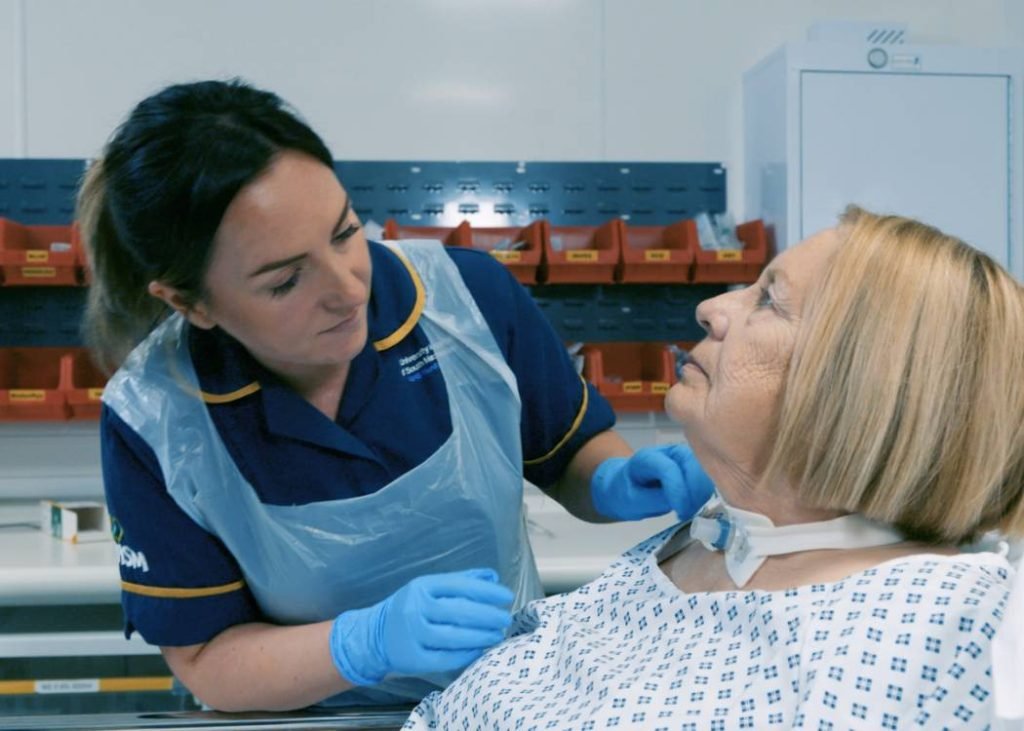

The stoma (opening where trach tube exits body) is a surgical wound that requires daily maintenance. Regular care prevents:
Cause: Excessive drainage, moisture, or irritation
Prevention: Keep site dry, change dressings frequently, monitor for drainage
Treatment: Physician may prescribe topical silver nitrate or recommend different products
Cause: Moisture, poor drainage management, or tight tube
Prevention: Keep dry, use protective barriers if needed, ensure tube isn't too tight
Treatment: Moisture barrier products, antibiotic ointment, physician guidance
Cause: Tube movement, inadequate rotation, or tissue overgrowth
Prevention: Gentle tube rotation daily, monitor for signs of migration
Signs: Tube seems shorter, difficult to suction, feeding backup
Treatment: Physician intervention (may need new tube or surgical correction)
Daily minimum, more frequently if site is wet, sweaty, or soiled. Change dressing every 24 hours or whenever it gets wet. Good hygiene prevents infections.
Minor bleeding during cleaning is normal (airway tissue bleeds easily). Apply gentle pressure with gauze for 1–5 minutes. If bleeding continues for more than 10 minutes or is heavy, contact a physician immediately.
Yes, with precautions. Cover stoma with waterproof dressing or plastic cover during showers. Keep water away from stoma. Some patients use shower shields or waterproof barriers. Never submerge tracheostomy in water.