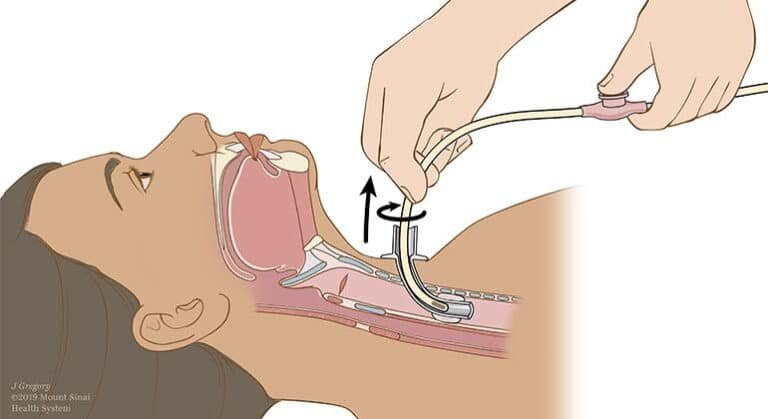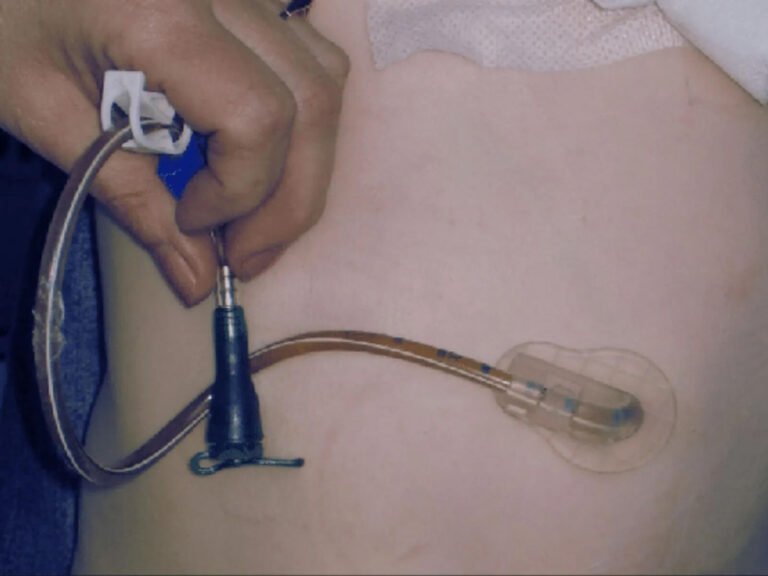

Your first week home with a feeding tube requires careful attention to your supply checklist, establishing a consistent feeding schedule of four to six sessions daily, and maintaining strict cleaning protocols with proper flushes before and after each use. You’ll need to monitor your insertion site for normal mild redness versus concerning signs like fever above 100.4°F or increasing pain. Document each feeding session, coordinate medication timing with your pharmacist’s guidance, and familiarize yourself with your equipment to build the confidence and skills necessary for successful long-term management.
Key Takeaways
- Confirm all supplies including feeding pump, formula, syringes, and extension sets are home before discharge day.
- Establish a consistent feeding schedule with four to six sessions daily, flushing tube before and after each feeding.
- Clean the insertion site daily with sterile technique and monitor for fever, increased pain, or unusual drainage.
- Crush only pharmacologically safe medications, flush tube before and after administration, and never mix drugs together.
- Document feeding amounts, duration, and reactions while watching for abdominal distension, cramping, or feeding intolerance signs.
Essential Supplies and Equipment Setup Before Discharge
Before leaving the hospital, you’ll need to verify that all necessary feeding tube supplies are in place at home.
Confirm all feeding tube supplies—syringes, bags, formula, and pump equipment—are home and ready before hospital discharge.
Create a thorough supply checklist that includes administration sets, syringes (60mL catheter-tip), feeding bags, extension sets, and prescribed formula.
You’ll also need a feeding pump if continuous or cyclic feeds are ordered, along with backup batteries and power cords.
Stock tube feeding essentials like pH strips for placement verification, water for flushes, and appropriate cleaning supplies.
Confirm you’ve received written feeding schedules, formula preparation instructions, and emergency contact numbers.
Request demonstrations of equipment operation before discharge.
Consider designating a clean, organized space for supply storage that’s easily accessible during feeding times.
Having everything ready prevents unnecessary stress during your first week managing enteral nutrition at home.
Creating Your Daily Feeding Schedule and Routine
Once you’re home with your feeding tube, establishing a consistent daily schedule becomes critical to maintaining adequate nutrition and preventing complications.
Begin by determining ideal feeding times based on your prescribed formula volume and rate. Many patients benefit from dividing feedings into four to six sessions throughout the day, mimicking natural meal patterns.
Coordinate your meal planning with medications, which may require administration before, during, or after feedings. Document each feeding session, noting formula amount, duration, and any adverse reactions.
Schedule flush times with sterile water to maintain tube patency—typically before and after each feeding.
Consider integrating feeding times around your care responsibilities for others, ensuring you don’t compromise your own nutritional needs while serving family members or dependents.
Proper Tube Care and Cleaning Techniques
Maintaining your feeding tube’s cleanliness directly impacts infection prevention and tube longevity. Implementing proper tube maintenance protocols safeguards your loved one’s health during this critical shift period.
Clean the insertion site daily using sterile technique. Inspect for redness, drainage, or skin breakdown that warrants clinical intervention. Flush the tube with 30-60mL warm water before and after each feeding to prevent clogging.
| Cleaning Component | Frequency | Technique |
|---|---|---|
| Insertion site | Daily | Mild soap and water, pat dry |
| Tube exterior | After each use | Damp cloth, air dry |
| Feeding equipment | After each feeding | Warm soapy water rinse |
| Tube flushing | Before/after feeds | 30-60mL sterile water |
Replace feeding bags and extension sets per manufacturer guidelines. Document all cleaning techniques and observations to guarantee continuity of care.
Administering Medications Through the Feeding Tube
Beyond routine tube maintenance, many patients require regular medication administration through their feeding tubes. You’ll need to verify which medication types are appropriate for tube delivery, as not all formulations work effectively.
Crush tablets only when pharmacologically safe, and request liquid alternatives when available. Certain medications require dosage adjustments due to altered absorption rates through enteral routes.
Not all medications can be safely crushed for tube administration—always verify compatibility and consider liquid formulations to ensure proper absorption.
Always flush the tube with 15-30ml of water before and after administering each medication. Never mix medications together, as this can cause tube occlusion or drug interactions.
Administer each medication separately with water flushes between doses. Consult your pharmacist regarding proper preparation techniques and timing relative to feedings. Some medications necessitate holding feeds temporarily to guarantee peak absorption and therapeutic effectiveness for your patient’s wellbeing.
Recognizing Normal vs. Warning Signs of Complications
While minor discomfort often accompanies initial tube placement, you’ll need to distinguish between expected adjustment symptoms and signs requiring immediate medical attention.
Normal symptoms include mild redness at the insertion site, slight drainage (clear or light yellow), and minimal discomfort during feedings. These typically resolve within days.
However, complication indicators demand immediate healthcare provider contact: fever above 100.4°F, increasing pain unrelieved by prescribed medication, purulent or bloody drainage, excessive redness spreading beyond the insertion site, persistent vomiting, tube dislodgement, or difficulty flushing.
Additionally, watch for abdominal distension, severe cramping, or absent bowel sounds.
Document daily assessments of the site and your loved one’s tolerance to feedings. This vigilance enables early intervention, preventing minor issues from escalating into serious complications requiring hospitalization.
Managing Common Challenges: Leaking, Clogging, and Discomfort
During the first week home, three mechanical challenges frequently emerge: tube leakage around the insertion site, formula clogging the tube lumen, and localized discomfort that interferes with daily activities.
Leak prevention requires evaluating stoma integrity and ensuring proper external bolster positioning. If leakage occurs, clean the site with sterile saline, apply barrier cream, and verify tube placement hasn’t shifted. Document drainage characteristics for your healthcare team.
Regular stoma assessment and proper bolster positioning form your first line of defense against tube leakage complications.
Clog management starts with prevention: flush with 30mL warm water before and after each feeding. If obstruction develops, attempt warm water flushes using gentle pressure—never force. Carbonated beverages or pancreatic enzymes may help dissolve protein buildup.
For discomfort management, evaluate insertion site inflammation, secure tubing to prevent tension, and consider repositioning techniques.
Contact your provider if pain intensifies or fever develops.
When to Contact Your Healthcare Provider
Certain warning signs demand immediate medical attention rather than waiting for your scheduled follow-up appointment.
Contact your healthcare provider immediately if you observe fever above 101°F, severe abdominal pain, persistent vomiting, or significant redness spreading from the tube site.
Urgent symptoms requiring when to call include excessive drainage with foul odor, tube displacement or accidental removal, bleeding that doesn’t stop with gentle pressure, and difficulty breathing during feeds.
You should also reach out if the tube becomes completely clogged despite flushing attempts or if skin breakdown develops around the stoma.
Don’t hesitate to contact your care team with concerns—early intervention prevents complications.
Keep emergency contact numbers readily accessible, including your gastroenterologist, home health agency, and after-hours medical services for prompt guidance.
Conclusion
Your first week home with a feeding tube requires careful attention to technique, schedule adherence, and symptom monitoring. You’ll gain confidence as you establish your routine and master tube care protocols. Don’t hesitate to contact your healthcare team with questions—they’re your essential resource during this adjustment period. Remember, most challenges you’ll face have straightforward solutions. With proper management and support, you’ll successfully integrate feeding tube care into your daily life while maintaining ideal nutrition and hydration.