You’ll maintain proper tube feeding site care through five essential steps: conduct daily visual inspections for redness, swelling, or drainage; clean the site using sterile saline with circular motions from insertion point outward; secure the tube with commercial devices at multiple points to prevent migration; monitor continuously for infection signs including purulent discharge, warmth, or foul odors; and document all assessments with precise timestamps while communicating abnormal findings immediately. These foundational practices form the cornerstone of thorough feeding tube management protocols.
Key Takeaways
Taking Care of Your Feeding Tube: Simple Steps That Make a Big Difference
Look at the tube site every day. Check for any redness, swelling, or liquid coming out. These signs tell you something might be wrong.
Keep the area clean and safe. Use gentle circular movements with sterile saline, starting at the tube and moving outward like ripples in water. This simple act of care helps keep infection away.
Make sure the tube stays in place. Use special holders to keep it secure without pulling or tugging. Think of it like protecting something precious—because it is.
Watch for warning signs. If you notice thick discharge, warmth, bad smells, or fever, these are your body’s way of asking for help.
Write down what you see and do. Keep track of changes, and always tell your healthcare team right away if something doesn’t seem right.
You’re Not Alone in This Journey
Caring for a feeding tube can feel overwhelming, especially when you’re doing it for someone you love. But remember—every time you clean that site, secure that tube, or check for problems, you’re providing life-giving care. You’re making a real difference in someone’s health and comfort.
The most important thing? You don’t have to figure this out by yourself. Having expert support means better care, more confidence, and true peace of mind.
If you or a loved one need help, don’t wait. Reach out to Skilled Trach Care today at (561) 677-8909 or email us at info@skilledtrachcare.com
Daily Assessment and Visual Inspection of the Tube Site
While tube feeding provides essential nutrition, the insertion site requires meticulous daily evaluation to prevent complications and guarantee optimal healing.
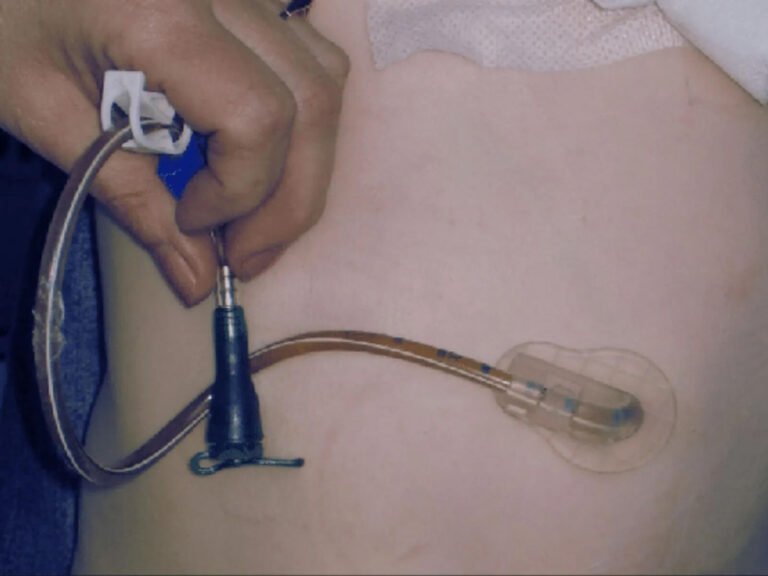
You’ll need to examine the skin surrounding the tube for signs of redness, swelling, drainage, or breakdown. Check for proper tube positioning and security, ensuring it hasn’t migrated or become dislodged.
Document any changes in skin integrity, noting color, temperature, and moisture levels. Assess for patient discomfort or pain during your examination.
Look for signs of infection including purulent discharge, increased warmth, or foul odors. Maintain strict tube site hygiene protocols while conducting your assessment.
Your thorough evaluation directly impacts patient comfort and prevents serious complications. Early detection of problems allows for prompt intervention and favorable patient outcomes.
Proper Cleaning Techniques and Antiseptic Application
Once you’ve completed your daily assessment, begin the cleaning process by gathering sterile saline solution, clean gauze pads, and prescribed antiseptic agents. Start by washing your hands thoroughly, then gently clean around the tube site using circular motions from the insertion point outward.
| Cleaning Solutions | Application Method | Frequency |
|---|---|---|
| Sterile saline | Gentle circular motion | Daily or per protocol |
| Chlorhexidine | Pat, don’t rub | As prescribed |
| Betadine | Apply with sterile gauze | Provider-specific |
Choose antiseptic types based on your patient’s skin sensitivity and physician orders. Apply antiseptic using sterile technique, allowing adequate drying time before applying fresh dressings. Don’t use hydrogen peroxide routinely, as it can delay healing and damage healthy tissue around the insertion site.
Securing and Stabilizing the Feeding Tube
After completing the cleaning process, you’ll need to secure the feeding tube properly to prevent accidental displacement and reduce skin irritation.
Effective tube stabilization techniques are essential for maintaining patient safety and comfort. Use commercial securing devices specifically designed for feeding tubes rather than improvised materials like tape alone.
Position the tube to minimize tension and create gentle curves that follow natural body contours. Secure the tube at multiple points along its length, ensuring the primary anchor point is close to the insertion site without placing direct pressure on it.
Rotate securing devices periodically to prevent pressure ulcers. Check that connections remain tight and the tube maintains proper positioning.
Document your stabilization method and regularly assess for signs of migration or complications.
Monitoring for Signs of Infection and Complications
Proper tube stabilization serves as your first line of defense against complications, but vigilant monitoring remains necessary to detect early signs of infection or other adverse events.
You’ll need to assess the insertion site daily for infection symptoms including increased redness, warmth, swelling, purulent drainage, or foul odors. Document any changes in skin integrity, noting wound edges and surrounding tissue condition.
Monitor your patient’s crucial signs, particularly temperature elevation, which may indicate systemic infection. Watch for tube displacement, leakage around the stoma, or granulation tissue formation.
Effective complication management requires immediate intervention when abnormalities arise. Contact the healthcare provider promptly if you observe concerning changes, as early detection and treatment prevent serious complications and optimize patient outcomes.
Documentation and Communication With Healthcare Teams
While clinical vigilance protects your patient’s immediate safety, thorough documentation and clear communication guarantee continuity of care across all healthcare team members.
You must record site assessments, skin condition changes, and any interventions performed with precise timestamps. Document feeding tolerance, residual volumes, and patient responses to establish patterns that inform treatment decisions.
Establish clear care protocols that standardize your documentation process across shifts. Include photographs when appropriate to track healing progression or concerning changes.
Communicate abnormal findings immediately to physicians, nutritionists, and nursing supervisors through proper channels.
Effective team collaboration requires you to share relevant observations during shift reports and interdisciplinary meetings.
Your detailed records become the foundation for adjusting care plans, preventing complications, and ensuring seamless exchanges between caregivers while maintaining ideal patient outcomes.
Conclusion
You’re Making a Real Difference
You now know the five important steps to care for a feeding tube site. These simple but powerful steps help keep your loved one safe, comfortable, and healthy. When you check the site each day, clean it gently, keep the tube secure, watch for problems, and write down what you see, you’re doing more than just following steps—you’re showing love through action.
Picture this: your gentle hands carefully cleaning around the tube site, your watchful eyes catching small changes before they become big problems, and your careful notes helping doctors give the best care possible. Every time you complete these steps, you’re protecting someone you care about from infection and helping their body heal and grow stronger.
This isn’t just a daily task on your to-do list. It’s a gift of care that makes a real difference in someone’s life. You’re helping them get the nutrition they need to feel better, have more energy, and enjoy time with family and friends.
Remember: You don’t have to do this alone. Caring for a feeding tube can feel overwhelming, especially at first. But you have support available whenever you need it.
If you or a loved one need help, don’t wait. Reach out to Skilled Trach Care today at (561) 677-8909 or email us at info@skilledtrachcare.com.