
services

Tracheostomy complications

Tracheostomy Complications & Warning Signs | Prevention Guide

You’ve noticed something different about your loved one’s tracheostomy, but you’re not sure if it’s normal or a problem.

Understanding common complications and their warning signs helps you catch problems early. This comprehensive guide covers infection, bleeding, stenosis, granulation tissue, and other complications with prevention strategies and when to seek medical help.
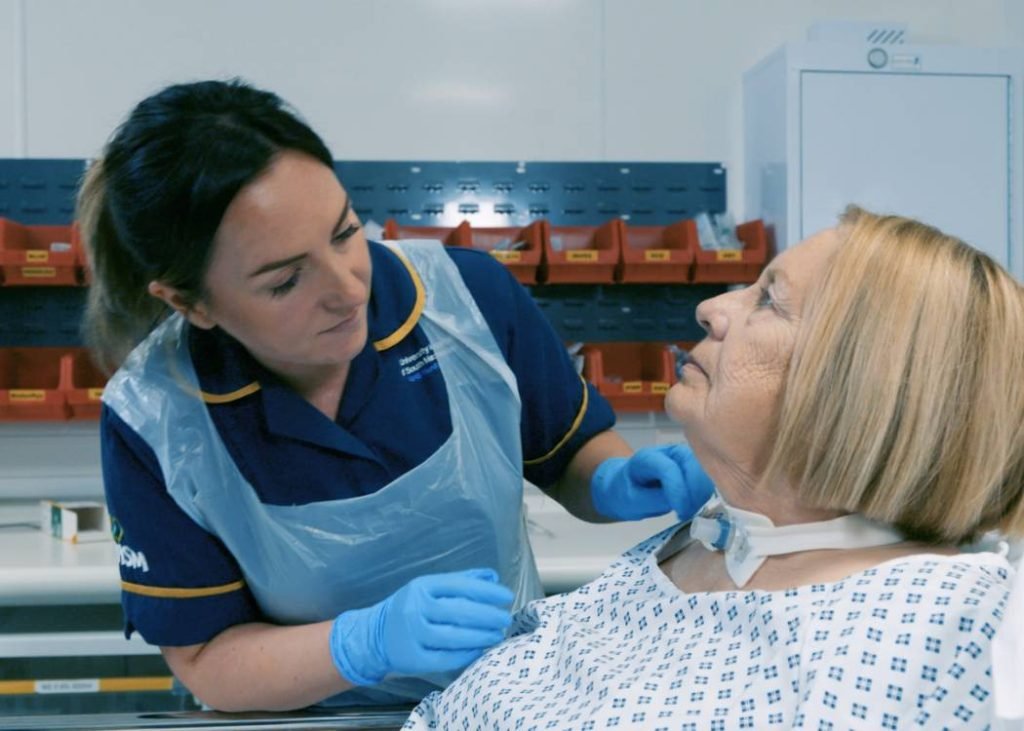
Common Tracheostomy Complications Overview

Complications are uncommon when proper care is maintained, but can develop. Understanding them allows early intervention:

  • Infection (most common)
  • Bleeding from stoma
  • Granulation tissue overgrowth
  • Tracheal stenosis (narrowing)
  • Buried bumper syndrome (tube migration)
  • Tube obstruction/clogs
  • Accidental decannulation
  • Speaking valve complications

Infection: Most Common Complication

Bacterial Infection Signs:

  • Redness spreading away from stoma
  • Yellow, green, or foul-smelling drainage
  • Warmth around stoma (fever in surrounding tissue)
  • Swelling/puffiness
  • Pus or pustules
  • Pain or tenderness
  • Fever (>101°F)
  • Lethargy or confusion (systemic infection)

Prevention:

  • Daily cleaning with mild soap and water
  • Keep site dry (change dressings if wet)
  • Hand hygiene before/after care
  • Use clean equipment
  • Monitor for early signs

Treatment:

  • Contact physician immediately if infection suspected
  • May require antibiotics (topical or oral)
  • Increased cleaning frequency
  • More frequent dressing changes
  • Lab work if systemic infection (blood cultures)

Bleeding from Stoma

Minor Bleeding (Usually Not Emergency):

  • Small amount of blood-tinged secretions
  • Oozing from stoma (not gushing)
  • Patient stable, breathing normally
  • Bleeding stops with 5 minutes pressure

Significant Bleeding (Seek Help):

  • Steady or pulsatile bleeding
  • Large amount of blood
  • Blood coming up through mouth
  • Signs of blood loss (pale, dizzy, weak)
  • Bleeding doesn't stop after 15 minutes pressure

Prevention:

  • Gentle suctioning technique (no excessive force)
  • Avoid rough handling of stoma
  • Regular site care prevents granulation tissue
  • Avoid coughing vigorously if possible

Emergency Response:

  • Apply firm, steady pressure with sterile gauze
  • Maintain pressure 10-15 minutes
  • If bleeding continues: call 911
  • Contact physician if recurrent bleeding

Granulation Tissue (Excess Red Bumps)

What It Is:

Reddish, bumpy tissue growth around stoma. Common after trach placement but usually resolves. Excessive growth indicates problem.

Causes:

  • Excessive drainage
  • Moisture around stoma
  • Irritation from tube friction
  • Infection
  • Improper cleaning

Warning Signs:

  • Excessive red bumpy tissue around stoma
  • Increased drainage
  • Bleeding from granulation tissue
  • Worsening appearance despite good care

Prevention & Treatment:

  • Keep site dry (frequent dressing changes)
  • Manage drainage with absorbent dressings
  • Physician may prescribe topical treatments
  • May use silver nitrate cauterization
  • Usually resolves with proper care

Tracheal Stenosis (Narrowing of Airway)

What It Is:

Scarring and narrowing of trachea around trach tube. Can develop weeks to years after trach placement. Prevents air from flowing normally.

Warning Signs:

  • Increased stridor (high-pitched breathing)
  • Difficulty breathing (especially with tube capped or removed)
  • Decreased tolerance for activity
  • Difficulty with suctioning (resistance)
  • Signs worse over weeks/months (gradual)

Prevention:

  • Proper tube size (not too tight, not too loose)
  • Avoid excessive cuff pressure (if cuffed tube)
  • Regular tube changes to prevent scarring
  • Gentle handling of tube

Medical Management:

  • Physician evaluation with imaging (CT, endoscopy)
  • May require surgical intervention
  • Dilatation procedures
  • Possible tube upsizing

Buried Bumper Syndrome (Tube Migration)

What It Is:

Tube migrates into tracheal tissue/wall. Prevents normal tube function. Uncommon but serious complication.

Warning Signs:

  • Tube seems shorter (migrating deeper)
  • Difficult or impossible to suction
  • Difficulty with tube replacement
  • Inability to withdraw residual
  • Feeding backup

Prevention:

  • Daily gentle tube rotation
  • Ensure tube not too tight or loose
  • Monitor tube position regularly
  • Proper tie securement

Medical Management:

  • Physician evaluation (X-ray/imaging)
  • May require new tube replacement
  • Possible surgical intervention

When to Seek Medical Help: Decision Guide

Call Physician Same Day If:

  • Increasing redness spreading away from stoma
  • Yellow, green, or foul-smelling drainage
  • Warmth around stoma
  • Swelling or puffiness
  • Bleeding that stops but recurs
  • Increased stridor or difficulty breathing
  • Any significant change in appearance/function

Call 911 or Go to ER If:

  • Fever >101°F with signs of infection
  • Severe respiratory distress
  • Uncontrolled bleeding from stoma
  • Rapid spread of redness (cellulitis)
  • Signs of shock (pale, confused, rapid heartbeat)
  • Tube displaced + respiratory distress

FAQ: Complications

Are tracheostomy complications preventable?

Many complications are preventable with proper care (daily cleaning, gentle handling, regular monitoring). Some complications occur despite excellent care (individual variation). Early detection allows rapid intervention.

What should I report to my physician?

Any changes: new drainage, increased redness, bleeding, change in stridor, difficulty suctioning, odor changes, or your loved one feeling different. Better to call unnecessarily than miss a real problem.

Related Resources